project
service
website
job
Custom Software Development
Software that fits how you work
We build custom software for companies whose processes do not fit off-the-shelf products: internal systems, customer portals and integrations between existing systems. Architecture, delivery and technical ownership come from one place.
Solutions
View portfolio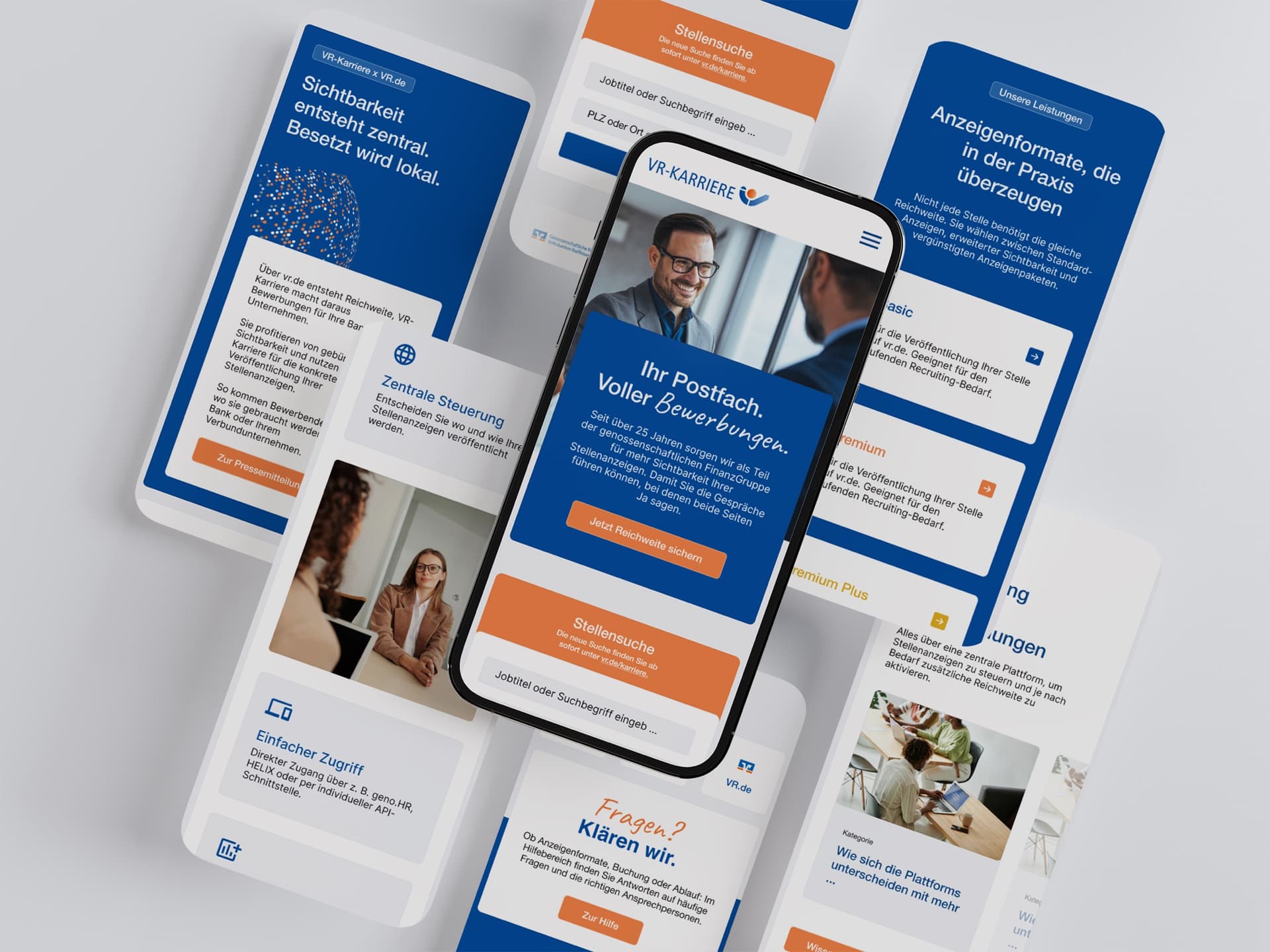
Services
View portfolioCustom enterprise software
Custom enterprise software is built for one business, not for a market. It pays off when a process is part of your business model and would only fit standard software through detours, exports and spreadsheets in between. What custom software actually is is explained in our glossary.
Internal systems and line-of-business applications
Most enquiries start with a spreadsheet that has outgrown itself. What comes out of it is an application with a clear data model, roles and permissions, history and reporting. We build the core people work with first and extend from there, not the other way around.
Mapping processes without detours
A process that only works with three workarounds costs time every day. We record how the work actually runs, including its exceptions, and model it directly. Exceptions are not edge cases here, they are part of the specification.
Data model and architecture
The data model decides what the software can still do in three years. We settle it before the first screen, document the reasoning and keep the application sliced so individual parts can be replaced without touching the whole.
- Requirements gathered with the people who use the system
- Data model and architecture before the first screen
- A working core early, extensions in planned steps
Customer portals, dashboards and B2B applications
A customer portal removes work that otherwise runs through phone and email. Customers, partners and field staff see status, upload documents and approve them without asking. When this turns into a business model of its own, the next step is a platform.
Self-service instead of follow-up questions
Every status request a portal answers is one phone call fewer. We cut the interface down to the three to five things users genuinely do and leave the rest out. A portal that does everything goes unused.
Roles, permissions and tenants
As soon as several companies, sites or partners share a system, the permission model decides how safe it is. We define roles and visibility early, separate tenants at data level and log who changed what and when.
Integration with existing systems
A portal is only as good as its data. It pulls orders, documents and status from ERP, CRM or your ticket system and writes back. If a source goes down, the portal stays usable and catches up afterwards.
- Login, self-service and status overviews
- Role model, tenant separation and audit trail
- Integration with ERP, CRM and ticketing
System integration and automating what you already run
Most companies do not need another system, they need the ones they have to talk to each other. We connect ERP, CRM, accounting and shop through defined interfaces so data is entered once and used everywhere. Where the rules are unambiguous, automation takes over the repetition.
Interfaces that hold up when things fail
An interface will fail at some point the only question is whether anyone notices. We build retry logic, logging and alerting in from the start and make every transfer traceable. Silent data loss is the most expensive failure in integration work.
Data migration and mapping
When replacing a system, the effort rarely sits in the new software but in the old data. We analyse what is there, define the mapping and run migrations as a rehearsal before anything goes live.
Automate once the process is settled
Automation amplifies what exists, including mistakes. We document the process, clear up the exceptions and automate afterwards. That way automation replaces manual work instead of producing faster rework.
- REST and GraphQL APIs with monitoring
- Migration with rehearsal run and fallback
- Workflows, approval chains and notifications
Architecture, operation and continuous development
Software is not finished at launch, it is in service. We take technical ownership beyond that point: updates, monitoring, further development and the decisions that come with it. If you need a neutral assessment before the project starts, that is our software consulting.
Architecture with documented decisions
Every architectural decision rules options out. We record why a technology was chosen and what the alternative would have been, so the decision still makes sense in two years and to people who were not in the room.
Operation, monitoring and security
Dependencies age even when the application does not change. We keep packages and runtimes current, watch availability and error rates, and get in touch before a user notices.
Development planned in quarters
Instead of single tickets squeezed between day-to-day work, we plan further development at fixed intervals: what gets built next, what it costs and what waits. That includes the option of handing the application to an in-house team.
- Documented architecture and technology decisions
- Automated tests, CI/CD and monitoring
- Quarterly planning of further development
Our clients
Our clients: J3L, Fair Kiez, HTW Berlin, Neo Fashion, SIB, EUV, Zahnkultur, Lexus, Neustadt, Opel, Universal, Zalando, BTB, Lottili, Mayaciel, E-Solaris, Frau Kruner, Spitzke
How we work
From requirement to running system. We work in four stages with fixed deliverables. Each stage ends with something you can see and a decision to make not a project that stays invisible for six months.
Why IVIS MEDIA
Custom software rarely fails on the technology. It fails on unclear requirements, on architectural decisions nobody can justify any more, and on projects that have no one left after launch. That is what our way of working is built around.
Technical ownership with one contact
Architecture, delivery and coordination run through the same person who also makes the decisions. You explain your requirement once, not again in every project phase.
Requirements before quote
We do not estimate blind. Where the starting point is unclear we propose a scoped discovery phase and only then put forward a quote that holds.
Experience in regulated settings
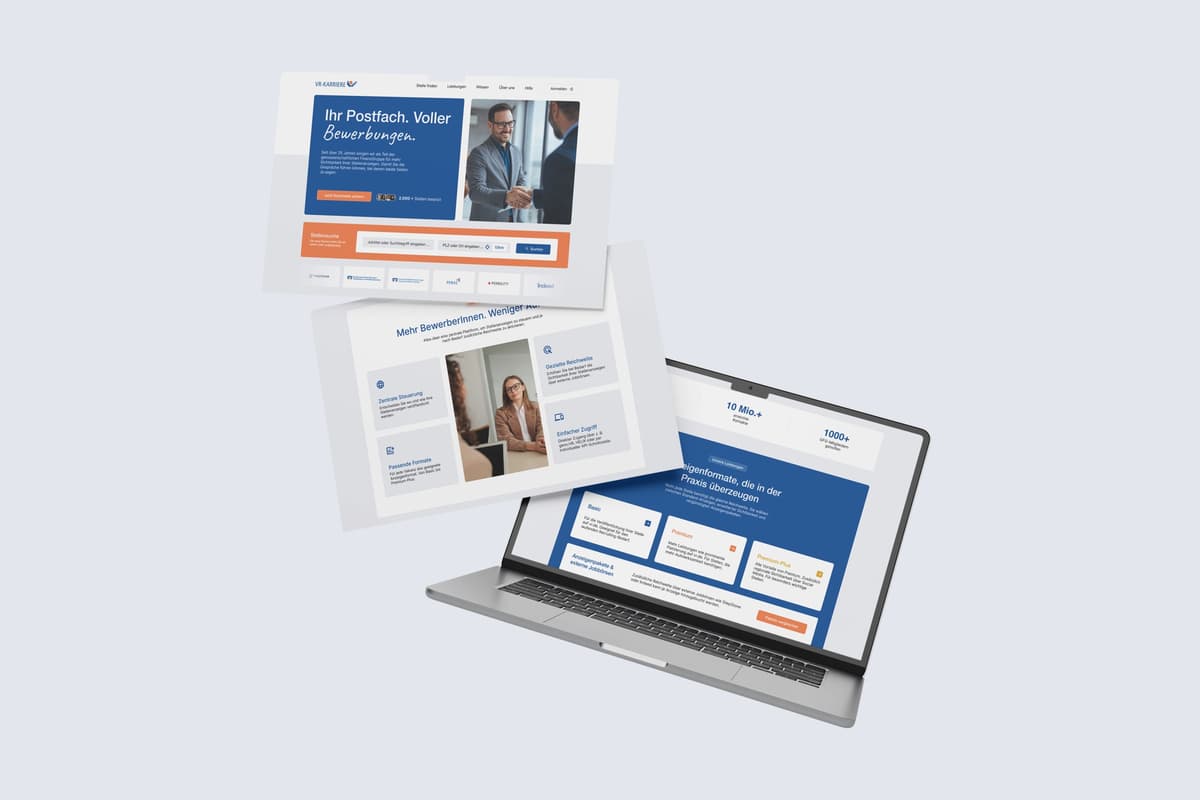
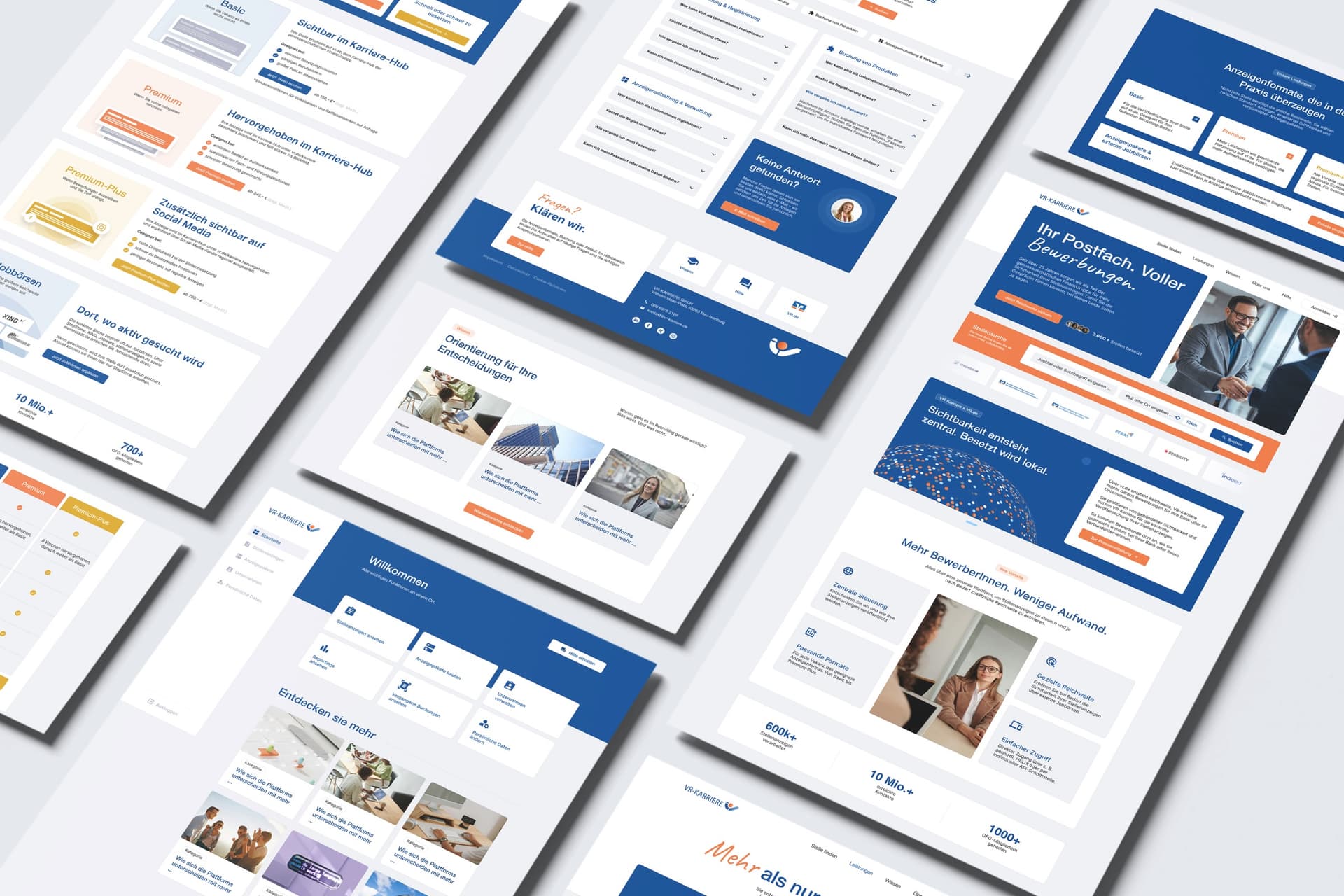
With VR-Karriere we delivered a portal in banking for the Volksbank network. Data protection, approval processes and accessibility were requirements there, not extras.
Existing systems get connected, not replaced
We do not start from zero when your ERP, CRM or shop works. In most cases integration is faster, cheaper and less risky than a rebuild.
Capacity beyond our own team
Alongside the in-house team we work with proven specialists and a larger development partner. Bigger projects are feasible without handing over quality assurance.
Ready to hand over from day one
Documentation, tests and deployment are set up so an in-house team can take over. We would rather keep clients through quality than through missing knowledge.
If you have a concrete project in mind, we start with the current situation: processes, existing systems and budget range. That leads either to a quote that holds or to the recommendation to solve it differently.
Frequently asked questions about custom software development
Get in touch
Get your project assessed
Tell us about your process and the systems involved. You get an assessment of feasibility, approach and order of magnitude and a straight answer if off-the-shelf software is the better option.
Monday to Friday, 10:00 to 18:00 (German time)